7 Nov 2026
Landmark Events That Shaped Modern Live Dealer Gaming Protocols and Participation Metrics
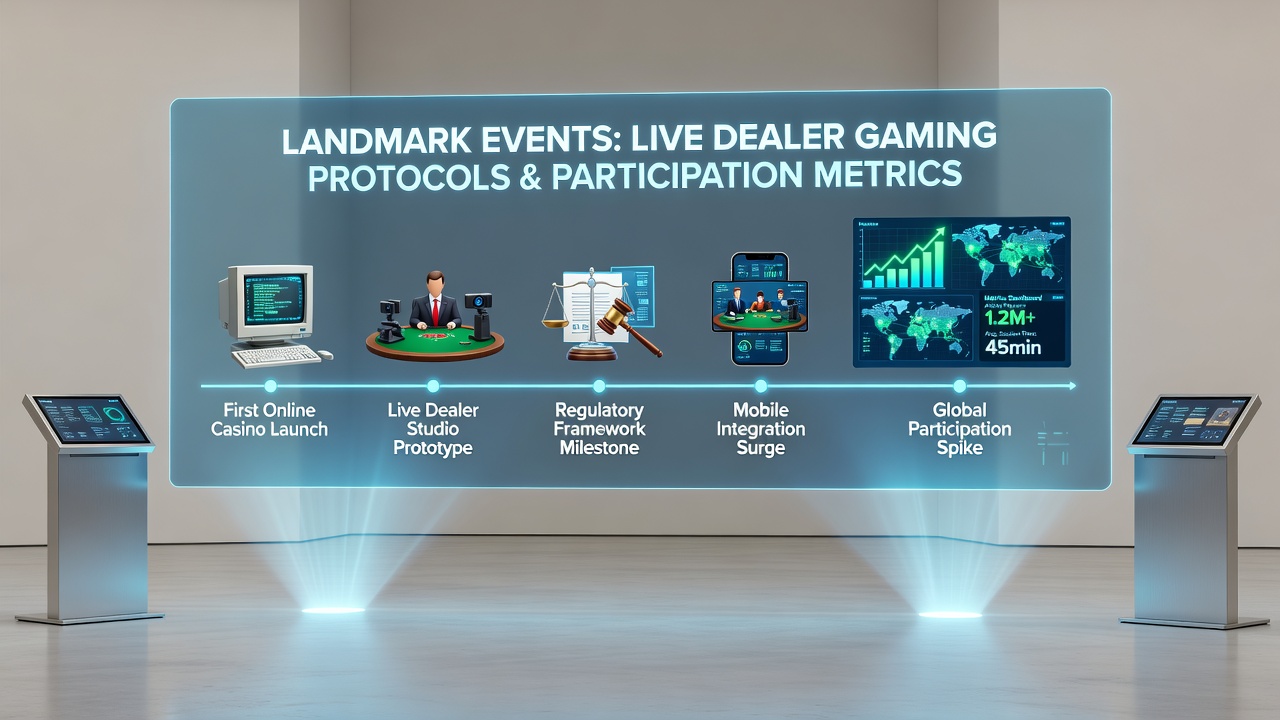
Live dealer gaming emerged from a combination of online casino infrastructure and real-time video technology, with protocols evolving through successive regulatory approvals and platform innovations that standardized data transmission, player authentication, and game integrity checks. Researchers tracking industry growth note that participation metrics began accelerating once jurisdictions established clear licensing frameworks for live streaming operations, allowing operators to scale beyond single-table formats while maintaining compliance with fairness standards.
Early Technological Foundations in the Mid-2000s
Development of dedicated live dealer studios started around 2006 when companies integrated optical character recognition systems with streaming servers to capture card shuffles and roulette spins without relying solely on random number generators. According to records from the New Jersey Division of Gaming Enforcement, these early setups required encrypted video feeds and synchronized timestamping to meet audit requirements, which laid groundwork for later participation tracking through session logs and bet volume analytics. Observers note that initial adoption remained limited to European markets until mobile broadband improvements in 2010 allowed operators to expand camera arrays and dealer interactions across more game variants.
Regulatory Milestones and Cross-Border Protocol Standardization
Between 2012 and 2016 several licensing authorities introduced mandatory third-party testing for live dealer software, including latency thresholds and dealer identification protocols that reduced discrepancies in game outcome reporting. Data from the European Gaming and Betting Association shows these requirements coincided with a measurable rise in verified player accounts, as standardized APIs enabled seamless integration between casino platforms and payment processors. Those who studied participation trends found that jurisdictions adopting shared regulatory frameworks experienced faster growth in average session duration compared to regions with fragmented oversight, because players encountered fewer interruptions during authentication sequences.
Impact of Mobile Integration and Real-Time Analytics
Smartphone optimization around 2015 shifted participation metrics dramatically when operators deployed responsive interfaces that maintained continuous video streams over variable network conditions. Experts tracking these changes observed that multi-camera switching protocols, combined with on-screen statistics overlays, increased repeat visit rates by providing immediate feedback on dealer performance and table occupancy. Studies conducted by research institutions in Canada documented how these enhancements supported higher volumes of concurrent sessions without compromising the cryptographic seals used to verify each hand or spin.

Post-2020 Expansion and Data-Driven Protocol Refinements
The period following 2020 brought accelerated adoption of cloud-based streaming infrastructure that allowed operators to manage peak loads while preserving frame-rate consistency across international player bases. Participation figures compiled by regional regulators in Australia and parts of Asia indicated sustained increases in active accounts during this time, attributed in part to refined identity verification steps that balanced security with reduced login friction. Those monitoring protocol updates noted that incorporation of AI-assisted anomaly detection for unusual betting patterns helped maintain trust levels, which in turn supported longer engagement windows and higher cumulative wager totals.
Developments Through Late 2026
By November 2026, several markets reported integration of blockchain-anchored audit trails into live dealer systems, enabling independent verification of game logs without exposing proprietary dealer scheduling data. Metrics released by government agencies in select North American and European jurisdictions reflected continued growth in monthly active users, particularly among tables offering localized language support and adjustable betting limits. Analysts examining these trends pointed to the cumulative effect of earlier standardization efforts, where consistent data formatting across platforms facilitated more granular reporting on retention and churn rates.
Conclusion
Collectively, the sequence of technological, regulatory, and infrastructural milestones created the current environment in which live dealer protocols support scalable participation tracking while meeting stringent compliance demands. Evidence from multiple jurisdictions illustrates how incremental refinements in streaming reliability, authentication procedures, and analytics integration have sustained measurable expansion in player engagement over nearly two decades.